By JOAN LADY HARDY
I vividly recall when I was eighteen and in a grumpy mood my mother saying to me ”take a look at yourself in the mirror, and remember we all get the face we deserve by the time we turn fifty”.
 Growing older is a mandatory process, but as someone wisely once remarked “there’s always something to be thankful for if you take the time to look for it…for example I’m sitting here thinking how nice it is that wrinkles don’t hurt”.
I consider myself lucky to be here, to have travelled the journey this far, in fact a friend said recently she wished she was 30 years younger to which I replied “but then you would have missed the 1960’s and 1970’s”!
Honestly, there are things I don’t like about getting older – gravity for example, and there’s not a lot to like about menopause (my husband can’t understand why, in these enlightened times, it isn’t called person-o-pause).
Some days I spend 10 minutes looking for my glasses but did I do that when I was 40? I have already forgotten. Read more »
A few years ago, I lost my mother’s recipe book when I moved house and I still sorely miss it. Her handwriting, the food spattered on the favourite pages and all 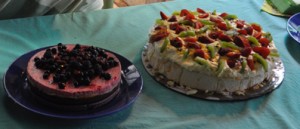 those much loved recipes that evoked so many memories of family feasts. My daughter promptly sent me a big blank book beseeching me to write down my own recipes.
“Write it all down, mum, because we don’t want to lose your food wisdom,’’ she said.
“Samuel (grandson No. 1) wants you to put in the recipe for the fairy cakes you made for his birthday party. And Angus (grandson No. 2) wants the recipe for chocolate meringues that you made for his party after Josephine was born in London.’’
My mother was always cooking something in the kitchen, whether soup simmering on the stove, making pasties for a picnic, or stuffing a chicken she had plucked, but it never occurred to me that my daughter had memories of me and my cooking life that she wanted to keep.
I have certainly grown and changed in my cooking style over my life from a distinctly Germanic flavour to a new journey into French cuisine. Thankfully this has proved to be far more successful than learning the French language. One of the joys of moving into my husband’s home is that he had a ready supply of French cook books – none of which I could read. However, imagine my delight when I discovered “2000 Favourite French Recipes’’ by Auguste Escoffier, hailed by all the best chefs as “The Master’’, the finest French chef of the past 100 years. Escoffier ruled the kitchens of the Paris Ritz in the early 20th century standardising cooking practices to create today’s haute cuisine. Don’t expect any “high’’ French cuisine in my blog, but do watch for selected recipes from this amazing cookbook, translated by Marion Howells – and wise words from Escoffier himself, which will give you a very special entrée into French cuisine. I will share my own journey into French cooking competence with a variety of recipes from the regions we visited in France – and I will also invite other French chefs who live here or in France, to share their recipes with us.
Bon Appetit!
Retirement has ushered in my return to the kitchen (the men in my life, son or husband, cooked the evening meal while I worked full-time). I have prepared for this by embarking on learning all about French cooking to inject excitement into my kitchen life. In the last year when I 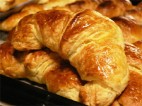 still worked, I attended four French pastry cooking lessons run by Andre Guerinet, Adelaide’s renowned patissier, who conducts classes in the kitchen of his famous patisserie, Mulots, on King William Road, Hyde Park, in Adelaide. This has been a joyful pursuit and Andre was an excellent teacher, concluding his three hour lesson by serving us with all the delicious sweet and savoury foods we had watched him make. He would demonstrate each step and we would roll, touch or cut the different doughs, or stir the syrup or custard to learn. There was something sensual in his cooking which engaged the senses in the sights, sounds and the smells which hung like sweet scent in his kitchen space. I was enamoured from the moment I read our recipe notes (invariably half in French with glossary to translate), and naturally, all recipes were titled in French. Read more »
No matter how brilliantly actors Christopher Plummer and Helen Mirren portrayed the warring Russian novelist Leo Tolstoy and his wife, Sofia, in the film The Last Station, there was a far richer story left untold.
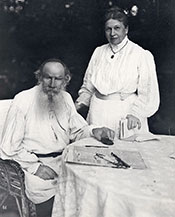 Anyone who has read the diaries of Sofia would know that the film failed to capture the depth and devoted character of the Russian Countess, who has been much maligned by historians as the shrew who made Tolstoy’s life a misery. The film was a missed opportunity to rewrite the poor image of Sofia and instead, only a few tangled threads of the rich human tapestry she created over almost 50 years. A few strategic flashbacks would have captured their exquisite love for each other for much of their long fruitful marriage, which soured so horribly at the end.
Sofia kept a diary from the age of 11 to the month before her death, aged 75 and the whole delightful, encompassing story is recorded in The Diaries of Sofia Tolstaya, translated by Cathy Porter. Her diary, filled with love, care, kindness and devotion to Leo and his works, has cast a startling new light on their tempestuous – and at the end, tragic – family life.
From her first stirrings of love for the man, a regular visitor to their family who was 16 years older to his utterance that he preferred Chertkov the diary is rivetting. “At first I didn’t think his visits had anything to do with me,’’ she wrote when she was 17. “But gradually I began to realise that my feelings for him were growing serious. I remember I once ran upstairs in a state of great agitation to our bedroom with its French window overlooking the pond and beyond it the church and as I stood at the window, my heart pounding, my sister Tanya came in and immediately realised how agitated I was Read more »
 culture | nadine 07/05/2010 |
  Comments (0)