THE GOOD GRANDMA:
Ours is a house of bliss right now as we host grand-children from either end of the age spectrum.
 Oldest grandson Andre, a solidly built 27-year-old fine arts student from Charles Darwin University has flown in from Darwin to transfer to UniSA with his Korean girlfriend, Saelim in tow. They are lively company with conversation filled with their dreams of success and plans to find a house, get a car and establish themselves supplementing a student allowance at Adelaide craft markets. He hopes to become a sculptor and comes here on a remote area government scholarship with a glowing reference from Darwin’s Arts Faculty. The first step in this endeavour is to borrow one of our cars and it becomes a familiar sight to see my Mazda 323 disappear down the driveway as they house-hunt and job-hunt and handle university paperwork. His enthusiasm is our joy, too, when he is accepted at Uni and we celebrate with cocktails at Montezuma’s Mexican restaurant.
They are gone just days before my oldest daughter, Serena’s family arrives from London – son-in-law, Jon and three precious grand-children, Samuel, Angus and Josephine, aged 8, 6 and 2 years. Now our settled life is delightfully disrupted and all four bedrooms are filled with mattresses for little bodies jammed alongside desks in both studies. Suddenly we need shifts to use the bathroom and the house is not only filled with the musical chatter of children sharing their little worries with grandma and pappy, but also with myriad shoes and toys everywhere to trip over.
They are the only grand-children on my side of the family and we see them for only a few days a year. Now we are mesmerised by the charm of our youngest grandchild –and my only natural grand-daughter. To be a good grandma, one must stop and take time to sit down and listen and talk to them, to magically produce movies on DVD on demand and in our house, to read books to them. This exercise shows I am out of touch. When I produce Father Bear Comes Home, and begin reading the 62-page tome to six-year-old Angus, he says in his cute British accent, “Grandma I would like to read that myself.’’ Oh, well, Josephine, at two years 10 months, will love my Mother Goose Nursery Rhymes, which I have saved for 30 years in various bookshelves for this very moment. Yet, the world of children has galloped into the technological age and these nursery rhymes such as Wee Willie Winkie and Old Mother Hubbard seem ludicrous to imprint in this fresh little mind. After all Josephine had shown us her capacity to remember. She could not even speak when she visited a year ago. A toddler of 22 months, we had borrowed a colourful trike for her to scoot around on and within minutes of arriving here this year, she asked “where is the little car grandma?’’ She had remembered, and I am suddenly conscious of the drivel I am feeding into her sponge-like brain – banal nursery rhymes which had no contemporary meaning. Why didn’t I browse bookshops beforehand for Australian rhymes?
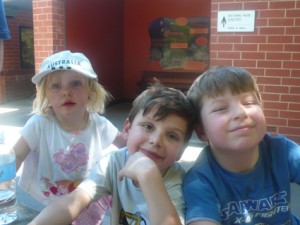 Women not only win the hearts of men through their stomachs, the kitchen is the place to make one’s mark as a good grandma. As I don an apron, I thank my own departed mother who would cook for hours for her 13 grand-children producing trayloads of biscuits, cakes, tarts or sausage rolls. So, I make pastry for lemon tarts and quiches and they knead the dough. I make stuffing for the duck before my chatting audience. “Let me stuff the duck,’’ says Samuel and I patiently watch as he fills the cavity with a sense of pride. “You will make a good chef,’’ I tell him. Praise wins the youngest of hearts. They are like the magpies outside on the lawn, mouths open waiting for food, fridge door swinging off its hinges, incessant questions, all against the drone of the washing machine.
All of it has brought our house alive again to the wonderful sound of children and we rejoice in our captivating young company, if only for five days.
 When I was a young child visiting Grandma, the sweetest moments were when the train would clickety-clack past the front gate along the Islington line. I would swing from the gate, all bobby socks and long plaits, waving furiously to the engine driver.
 travellers tales | nadine 05/06/2010 |
  Comments (4)
  My esteemed colleague, Peter Goers’ article today (Sunday, May 30) needs to be addressed and to set the scene here are some vital statistics to mull over on World No Tobacco Day – May 31.
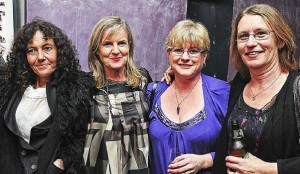
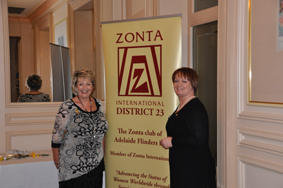 An impressive pile of 40 colourful hand-made blankets were donated to Catherine House for Adelaide’s homeless women at Zonta International’s handover dinner for the Adelaide/Flinders club this week.