Pretty Pink makes perfect pad for Gurley Brown

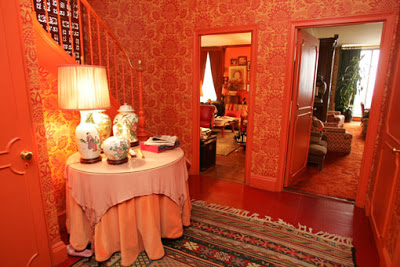
The vibrant foyer of Helen Gurley Brown's apartment in New York.

The vibrant foyer of Helen Gurley Brown’s apartment in New York.

The plush pink pad of renowned Cosmopolitan magazine editor, Helen Gurley Brown, who died three years ago, is up for grabs in New York.

The American author, editor and businesswoman,  who was 90 when she died in August 2012, had a fetish for pink. And she lavishly splashed 50 shades of pretty pink all over her famous  four-storey “pink penthouse’’ in the Beresford Apartments at 211 Central Park West, in New York.  Now it is being sold “as is” in all its pink splendour with a $27.85million price tag.

Gurley Brown, the author of the sensational Sex and the Single Girl,  was the editor of Cosmopolitan magazine for 32 years and her spunk and racy bon mots revolutionised women’s magazines.

She lived in the apartment, which has stunning views, for 40 years of her life.

When Vanity Fair asked her in 2007 where she would like to live, she responded: “Exactly where I am living—the Beresford Apartments, on Central Park West and 81st Street. We have the top four floors of a tower apartment. I’m slightly prejudiced, but I think it’s the best apartment in New York.”

Terrorists take terrible human toll in Paris


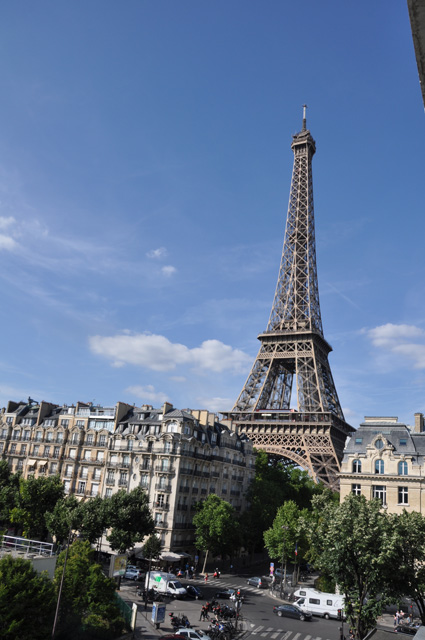
Paris's iconic Eiffel Tower

Paris’s iconic Eiffel Tower

Paris, the City of Light, has been plunged into darkness, fear and grief by a series of terrorist attacks by gunmen and suicide bombers, which have left 129 dead and 352 injured – 99 critically.

In the wake of the shocking news which gripped the world this morning, comes the realisation that it was naive  to think that the massacre earlier this year of journalists at the satirical magazine Charlie Hebdo in Paris, was a once-only attack.  Instead Black Friday ushers in a new terrorist modus operandi reflected in the discovery that at least 3 of the murderous gang of 8, came into Europe via Greece registering within the flood of refugees. What is so frightening is that the Black Friday murderers intended to show that no one venue was safe from terrorism in Paris.  They murdered  Parisians indiscriminately in their beloved cafés, restaurants, and bars and, particularly, the creative heart of Paris – the concert hall and its beloved national sporting  venue, the football stadium.  These are the magnets for Parisians as they enjoy their lovely lifestyles in what has always been known as the City of Lovers. Now so many deaths of Parisians of all ages, seems to fulfil a forecast in March this year by Islamic State that the streets of Paris would be filled with the dead.  News coverage of the carnage – lineups of ambulances and paramedics carrying sheets of alfoil for the injured and others bearing body bags of the dead has cast a pall of grief over the city.  French president, Francois Hollande has declared the terrorist attacks as “an act of War”. He has declared a state of emergency and a three-day period of mourning. All schools and universities have been closed. The Eiffel Tower, the iconic symbol of France, has been closed indefinitely.

France has closed its borders in a vain bid to stop any repeat attacks. But, alarming questions need to be addressed. How could such a wide-spread simultaneous terrorist exercise be mounted so successfully without France’s sophisticated surveillance and security system detecting a whisper of “chatter’’.

At just the moment that we are led to believe perhaps the roll-back of Islamic State has begun in Syria and Iraq through a successful campaign to re-claim one of its strongholds, its leaders seem to have moved the goalposts, mounting a terror war on the world – carrying out its merciless acts in our own Western backyard – in the most beautiful city in the world.

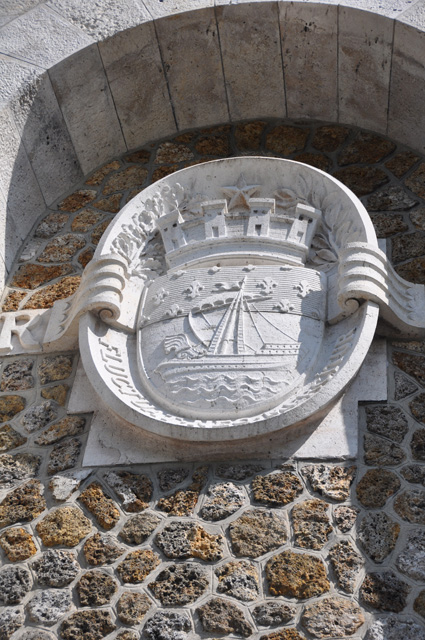
Coat of Arms of Paris at Sacre Coeur

Coat of Arms of Paris at Sacre Coeur

It is at catastrophic events in history that Paris citizens should cling to the 15th century message of the city’s Coat of Arms (seen here at Montmartre) which means “Paris is tossed by the waves, but she is not sunk”. However, today, we must heed the message of social media – Nous sommes Paris and pray for Paris and its citizens.

There is hope that the imminent G20 meeting of the world leaders in Turkey will devise a miraculous solution to the threat to world peace posed by the growing numbers of radicalised young Muslims in western society.

Prime Minister Malcolm Turnbull was right when he said we must stand up for our freedom and our basic right to feel safe in our community. Meanwhile, the world weeps as one with the French innocents killed on Black Friday – Vendredi noir.

Mother koala and baby make a house call

Mother Koala and baby visit my home.

Mother Koala and baby visit my home.

The other night, at the height of a vicious storm, I had startling house visitors.   I took this photograph of a mother koala and her baby terrified by the storm and trying to get into the house. Mother koala was  literally pawing on my door and pacing back and forth.  It was as if she was the universal animal mother imploring “Please let me in so my baby will be safe from the thunder and rain.”

Initially, I couldn’t stop my dog Oscar going absolutely berserk and barking loudly outside my bedroom. It was midnight. Very cross with him, I got up and I found the koalas crouched at  the side of the house. Mother koala had somehow landed inside the slatted gate, which encloses the rear patio defined by a high cement slab fence.   Oscar had them bailed up. So I picked him up and  locked him up in the laundry.  Then mother koala  continued her journey to my rear sliding glass door, clearly wanting to come in from the fierce weather.

I had no idea what to do, but sensed her need for help. Then I thought of Animal Rescue and RSPCA and telephoned for help to a recorded message.  As I watched her powerful paws on my door,  I thought of a solution. While she was at the rear door, I raced around the front  and opened the side gate. I suspect she heard the latch go, because then I coaxed her back around the corner to freedom.  It was an amazing spectacle to have this wild animal with the wisdom to approach a human being and then to watch her march back into the night, baby firmly latched onto her back during all the excitement.   So I didn’t have to phone Koala Rescue after all. And I have a photograph to rival that classic shot of the cyclist sharing his water bottle with the parched koala on the road during one of our hottest days.

My night visitors were the most exciting thing to happen to me up here at Belair for a long time and reflect  why I am so happy up here living among the gum trees.


A “Sparkie” life of family and faith for Frank

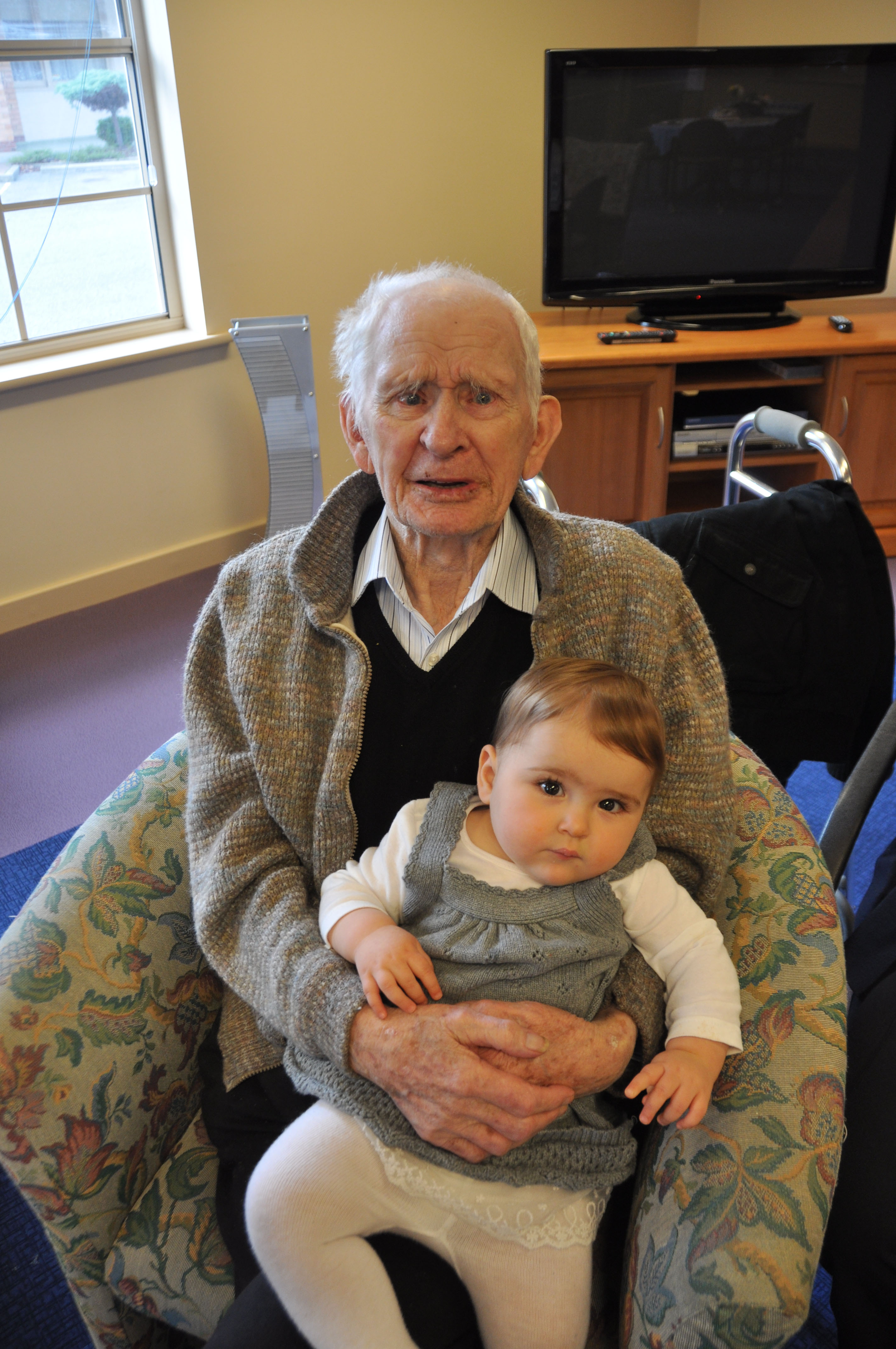
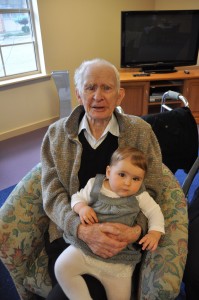
Father Frank and great grand-daughter Scarlett

Father Frank and great grand-daughter Scarlett

My father Frank Buxton, who died on October 1, aged 96,  was a cheerful character whose sense of humour reflected a certain Britishness.  He was born in Sheffield, England, on October 22, 1918, however, when he was a two-year-old tot, his parents Emily and Harry Buxton brought him to South Australia on board the SS Beltana with his babe-in-arms brother Lesley. Dad’s British auntie had lived to 100 years, and as the years added up and Frank had no great disease diagnosed, we half expected him also to get a telegram from the queen.

However, his vital organs simply wore out and as my siblings and I sat with him during his last few dying days, we agreed that we had never heard him complain, even though his was a difficult life of a small businessman with a large family. Even though he was born with a lazy eye and in later life he went blind through glaucoma. Even though his hearing faded by the time he was 90. Dad would claim he was a lucky man, that I was his “sweet daughter”.

It was because of that lazy eye that Dad met our mum, Florrie Fiegert, because he failed his medical for military service in World War II.  Florrie lived on a farm in the Mallee near Loxton and when she  went to Renmark to pick apricots with the Women’s Land Army, she met Frank.  We grew up with the romantic story – how dad was working on the adjoining fruit block owned by his married sister Lilian. One day on the local bus for the workers, he caught sight of  “a gorgeous black-haired beauty” and enquired of his sister who it might be.  Soon a ladder, borrowed from the neighbours was returned and dad met mum. He wooed Florrie by letter, the “city slicker” initially frightened by the draught-horses on the Fiegert farm.  He would travel to Pata in his much-loved Nash with its gas producer and wartime blacked-out lights.  He had to join the Lutheran Church to claim her heart, but they married at the Concordia Lutheran Church, Loxton, on July 10, 1943 – despite the warnings of his mates on the assembly line where he worked as a tool and jig maker on aircraft production.   They thought he was mad joining a “German church” in wartime.  However, dad became a stalwart leader at the Holy Trinity Lutheran Church was a member of the Full Gospel Businessmen’s Association.  Throughout his life, he sang gospel songs around the home.

I was the first-born of the union and mum took me home to their rented rooms attached to a dairy farm in Islington, across the railway line from my grandparents.

Mum and dad had four other children, my three brothers, Dallas, Andrew and Mark, and my sister Anne, born on my 16th birthday.

I had a good childhood with dad before he became consumed with his growing electrical contracting business. Each Friday night he took us youngsters to grandma’s place and then we would go to the Rowley Park speedway to get covered in dust.  (Dad had had a wild youth before meeting our mum and raced motor bikes in “scrambles”, a dangerous sport racing across open country).   Every Saturday afternoon we would go to the Central Market to buy the cheap vegies. But our big outing of the week was going to church.

Dad was a “sparkie” and had a few strategic “breaks of luck” to raise him up from his poor childhood.   He had been very bright at Prospect Primary School, winning a scholarship to attend Adelaide Boys Technical High School. He completed an apprenticeship with Adelaide Electric Supply Company, now SA Power netowrks and after the war, he became a tutor at the electrical trade school.   Soon my father went into business on his own as an electrical contractor.    As dad’s business, Buxton Electrical Company Pty Ltd,  burgeoned and his staff grew to sometimes 20 electrical tradesmen and apprentices, he became less emotionally engaged with his family.  Our mum was a director of Frank Buxton Electrical Company, so ours was a very busy household as she handled school routines, new babies and the business.

My father was so proud of marrying Florrie, his business, his Church leadersip and the two houses he built for his growing family at 137 Galway Avenue Broadview. He and mum built the first humble cottage on the big corner block after the war in the barter system of the SA Home Buiilders Association. Dad told me he took five years to pay back all his subbies with electrical services.

When I was about 8 years old, dad built the big freestone home in front of the cottage, facing Galway Avenue and the cottage became his business workshop.

His life force, though, was his electrical contracting business, which he ran for more than 50 years.  He was immensely proud of being “the bloke who wired Woomera” and he had seven electricians in Woomera with a site office and workshop there.   He saw his legacy to the electrical industry to be the 17 apprentices he trained, including his own three sons.The business moved four times along Main North Road, but the workshop and retail store was at 109 Main North Road, Nailsworth for 18 years. The company handled diverse electrical jobs throughout South Australia from Kangaroo Island to Ceduna to Bordertown. He was a kind boss as he managed a large work force on difficult jobs such as lighthouses, supermarkets and multi-storey buildings. He became renowned in the electrical industry and “wired Target” at Sefton Plaza. He  held the maintenance contract for all the northern metro Woolworths stores.

When our mother became ill, dad closed the business, which had been transferred back to the little cottage a few years beforehand.  When mum died in 1997, dad met a Renmark lady, Elizabeth Schloithe and when she proposed to him on Valentine’s Day soon after they met, dad accepted. We were very shocked, particularly as I had bought Galway Avenue, my childhood home to live with my dad, who was 81 years old.  Instead, in August 2000, he married and moved to Renmark. He acquired three adult step-children. Dad was married to Elizabeth for 10 years and became her carer until she died.  For the last five years of his life, dad lived in nursing homes – at Renmark and for the past three years at Glynde Lutheran nursing home where his sense of humour became legendary.

He always claimed to be 105 and that he travelled to Sheffield to get his birth certificate to prove it.  Yet he died three weeks short of his 97th birthday. Our dad was a true gentle man, who leaves behind his five adult children, in-laws, 13 grand-children and 13 great grandchildren.
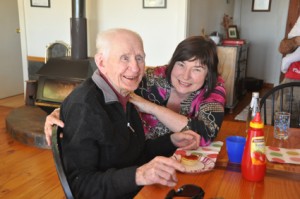
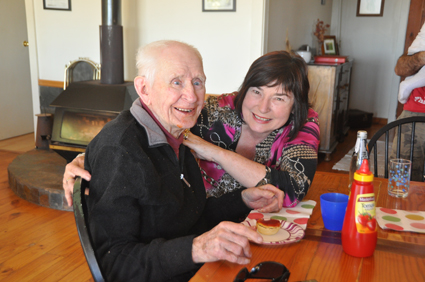
Dad and me on his 94th birthday
Dad and me on his 94th birthday


Bastille Day big success despite drama

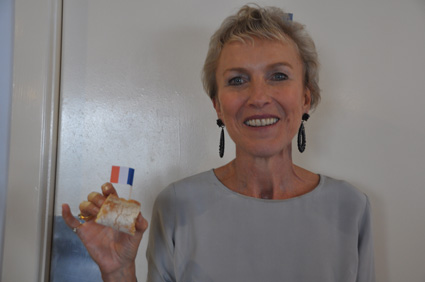
Sue Crafter at the Bastille Day Breakfast

Sue Crafter at the Bastille Day Breakfast

This year’s Bastille Day breakfast organised by L’Agence Consulaire de France d’Adelaide had an unexpected element of drama.

The volcanic eruption in Bali had stranded  Adelaide’s honorary French consul, Sue Crafter at the Bali Airport  on the eve of the Bastille Day Breakfast she was to host. Sue had organised  the annual event which celebrates France’s national day at the South Australian Sea Rescue Squadron at West Beach on Sunday, July 12.

At the point of despair on Saturday,  Sue telephoned French community leader and Singapore Airlines State Manager, Hugh Chevron-Breton to  help secure a flight home for herself and husband, high profile lawyer Michael Abbott, in time for the breakfast.

“I said to Hugh, if nothing else, could he arrange for the sailors’ hats to be brought home as luggage,”  said Sue, explaining that the hats were for the children attending the event.

Voila!  Hugh, a renowned heavyweight in the airline industry, arranged for the relieved couple to fly out on Saturday night – hours before the breakfast.   When  the aircraft touched down at Adelaide Airport Sue simply needed to cross Tapleys Hill Road to the  Sea Rescue Squadron’s clubrooms on Barcoo Road, West Beach.

Meanwhile, Hugh had taken on the task of collecting the French goodies – croissants, bagettes, brioches, pains au chocolat, les confitures, and other delicacies from French-born patissiere Andrea of Mulots and when Sue arrived all was in readiness for Adelaide’s French community to celebrate their nationhood and culture.

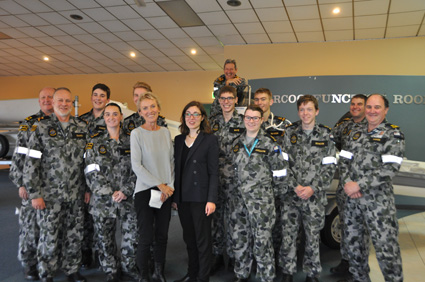
The Sea Rescue Squadron with Sue Crafter, Honorary Consul for France in SA

The Sea Rescue Squadron with Sue Crafter, Honorary Consul for France in SA

It all went swimmingly despite the foul weather with 100 guests enjoying exercises and displays by members of Sea Rescue throughout the morning. Naval cadets gave nautical lessons to children attending. Umbrella Accapella sang rousing nautical songs from Brittany and Puppets of Penzance entertained the children.

“The Maritime theme was an attempt to offer subtle
support to the French bid for HHS submarine project,” said Sue.


New therapy could stem death rate from prostate cancer

Olivier and I in the Yarra Valley

Olivier and I in the Yarra Valley

The Advertiser today ran a good news story that new therapy could beat the most resistant prostate cancer.  The new treatment, which acts on the immune system, achieved almost complete remission in mice when combined with chemotherapy.  It was published on May 1, the same month my husband Olivier died of prostate cancer three years ago. He was diagnosed in January 2011 and the article reports that 19,993 new cases of prostate cancer were diagnosed in Australia that year.   This made up 30 per cent of all cancers diagnosed in Australian men – almost one in three.

In 2012, 3079 men died of prostate cancer. My husband was numbered among those sad statistics because he died on May 11 that year aged 73.  By the  age of 85, 1 in 5 men will be diagnosed with this killer cancer if successful treatment is not discovered. Each day of our life together was precious to me and I sincerely hope that this new treatment saves many women from such devastating, unnecessary loss of their life partner.

Us scientists explained that aggressive tumours are partly caused by immune system “B cells” that impairs the body’s natural defences in prostate and other cancers.

The article which was first published in the Daily Mail reported that the researchers found a way of blocking the development of these B-cells, or removing them before using low doses of the drug oxaliplatin which activates cancer-killing  immune cells in small tumours. Researchers acknowledged it did not work as well for large tumours, hence the importance of early diagnosis.

Olivier’s aggressive prostate cancer did not respond to chemotherapy. Researchers  have noted that this may well be because B-cells in the immune system undermine the effectiveness of both traditional and promising new drugs.

Sadly, Olivier’s cancer had spread into his spine before his primary cancer in the prostate was diagnosed and while early treatment for prostate cancer is often highly successful, there are “few options for men with aggressive drug-resistant prostate cancer that has started to spread”.